You can have a wonderful day on the Lake District fells in horizontal rain, and a miserable one in bright sunshine. The difference is rarely the weather itself. It is whether the bag on your back was packed for the day you are actually going to get. The fells here catch far more rain than the towns below, and the tops can be many degrees colder and far windier than the car park you set off from. None of that is a reason to stay indoors. It is a reason to decide, before you leave, what will keep you comfortable and what will get you back down.
Read the forecast for the tops, not the town
Start with a mountain forecast rather than the weather app on your phone. The Met Office mountain forecast and the Mountain Weather Information Service both cover the Lake District specifically, and they tell you the things that matter: how likely the summits are to be clear of cloud, wind speed and gusts at height, expected rainfall, and whether the freezing level sits above or below your route.
Wind is what most often turns a good day into a bad one. On an exposed ridge, a steady forty-mile-an-hour wind with stronger gusts is enough to make walking difficult and to feel genuinely serious on steep or loose ground. Wet rock makes it worse. If the forecast shows that, save the ridge for another visit and pick something lower.
Look at the days before your walk, too. After a long wet spell the ground is saturated, paths turn into streams, and becks that were a simple step across in dry weather can be fast and knee-deep. Turn back at a crossing you are not happy with. There is always another day.
Waterproofs and layers: what goes in the bag
Assume you will get wet at some point, and dress so that being wet is bearable rather than dangerous.
- Waterproof jacket with taped seams and a hood that fits over a hat. Pit zips let you dump heat on the climb, so you don't soak yourself from the inside.
- Waterproof trousers, ideally with long zips so you can pull them on over boots without sitting down in the mud. The pair left in the car is always the pair you want at 600 metres.
- Base layer in merino or synthetic. Cotton holds water against your skin and chills you.
- Mid-layer fleece or synthetic jacket, plus a spare warm layer kept inside a dry bag.
- Two pairs of gloves — a thin pair and a waterproof pair — and a warm hat. Head and hands lose heat quickly the moment you stop.
- Dry bags or a rucksack liner. A rucksack cover is a bonus, not a plan; water gets in through the seams and from the bottom.
- Spare socks in a dry bag. Dry feet at the halfway point are worth the extra weight.
Boots, feet and the small kit that saves a day
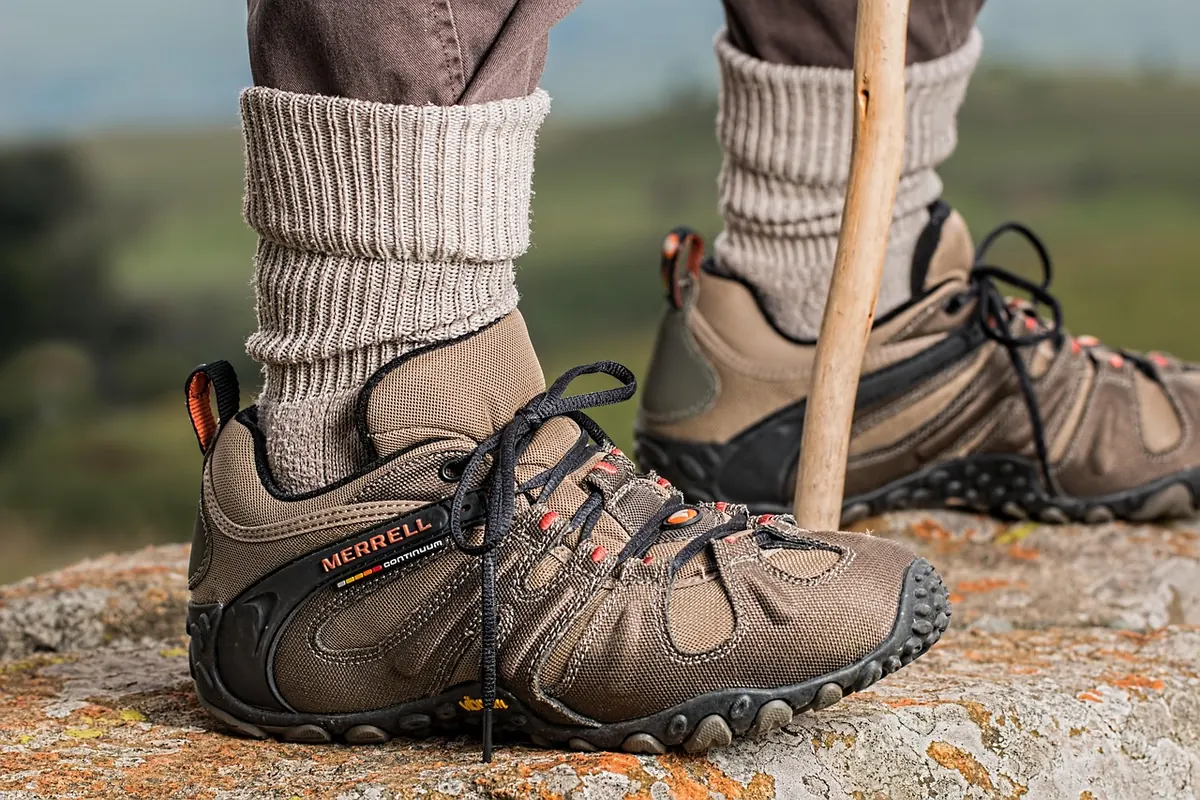
Waterproof boots with proper grip and a pair of gaiters will do more for your comfort than almost anything else you can carry. Gaiters keep heather, bog and grit out of your socks, and they make a real difference on the wettest paths around Great Gable or the back of Skiddaw.
Take trekking poles if you use them. On greasy rock and steep, loose descents they take the strain off tired legs and give you a third point of contact. Pack blister plasters and a small roll of tape, and deal with a hot spot the moment you feel it rather than two miles later.
Navigation that works with wet hands and gloves
A paper map and a compass in a clear case remain the most reliable kit in poor visibility. The OS Explorer OL4 to OL7 sheets cover the national park; buy the one for your area and keep it accessible, not buried at the bottom of the pack. If you can take a bearing and follow it on a compass, you can get off a cloud-covered summit.
Your phone is a useful backup, not a substitute. Before you leave, download the offline map for your route, and remember that signal is patchy to non-existent in most valleys and on the fells. Keep the phone in a waterproof pouch, carry a small power bank in winter, and take a head torch with spare batteries. A short day that runs long in the dark is the classic way to get caught out.
In an emergency, call 999 and ask for mountain rescue. If you have signal, be ready to give a grid reference or a what3words location and a clear description of where you are.
Food, drink and the ten-minute stop
Eat before you are hungry and drink before you are thirsty. Food that can be eaten with gloves on is the goal: a sandwich in a box, flapjack, nuts, a handful of sweets. A flask of hot tea or soup is heavy, and on a cold wet day it is the best thing in the bag.
Keep stops short and purposeful. Find shelter from the wind, put on a layer before you start to feel cold, eat, drink, then move on. Standing around in the rain in a damp top is how a good day goes wrong.
Shivering, clumsiness and going quiet are early warning signs. Get the person out of the wind, add layers, get food and a warm drink into them and head downhill. If someone becomes confused, drowsy or stops shivering altogether, treat it as serious and get help. Anything beyond mild cold deserves proper medical advice, and a mountain first aid course is money well spent before you need it.
Plan the way out before you set off
Set a turnaround time, not just a turnaround point, and write it down. "We turn round at two o'clock whatever happens" is a decision made by a rested, sensible version of you, and it holds up much better on a windy col than a debate about how close the summit looks.
Have a lower alternative in mind for every walk. If the cloud drops onto Helvellyn, the shores of Thirlmere and Derwentwater still give you a fine few hours. Instead of the Langdale Pikes, walk the valley floor to Dungeon Ghyll for a pint. Buttermere's lakeshore circuit, Tarn Hows, Grizedale Forest and the path to Aira Force all work in weather that would make a ridge foolish.
Tell someone where you are going and when you expect to be back, and message them when you reach the car. With a group, the slowest person sets the pace, and if you start to string out across a hillside in cloud, stop and regroup.
The night before and the morning of
Five minutes of preparation covers most of it. Check the mountain forecast, not the town one. Lay the kit out and put the spare layers and socks in dry bags. Charge the phone, download the offline map, pack the paper map and compass, and put fresh batteries in the head torch. Agree the route, the alternative and the turnaround time, and let someone know.
Then go. A wet day on the fells, with a bag packed for it, is still a good day out — quieter paths, fuller becks, and a pub at the end that has rarely felt better.
Photo: stevepb / Pixabay