Helvellyn is one of the most popular mountains in England, and the view from the top earns every step. It is also the kind of hill that catches people out. The summit is a broad, stony plateau; the drama is on the east side, where Striding Edge and Swirral Edge fall away towards Red Tarn. Almost every difficult day on Helvellyn starts with a small decision made near the car park — a route chosen because it looked short on the map, a forecast skimmed rather than read, a waterproof left behind because the morning was sunny. These are the mistakes that come up again and again, and the habits that prevent them.
Treating Striding Edge as a footpath
Striding Edge is a Grade 1 scramble, not a walk with a view. In dry, settled weather it is a magnificent outing with plenty of hands-on rock and bypass paths around the awkward bits. Wet rock, a strong crosswind or a slow party ahead of you changes the picture entirely. Swirral Edge, which drops from the summit to Red Tarn, is shorter but still a scramble with real exposure.
Nor is it only the ascent that matters. Plenty of people happily climb Striding Edge and then find that descending Swirral Edge is harder work, especially on tired legs or unsure feet. If in doubt, go up one edge and come down the long way round.
Questions worth answering before you set off
- Do you actually want hands-on scrambling, or would a steep walk suit the group better?
- Is everyone comfortable with sustained exposure and a few moves that need both hands?
- What will the rock be like if it is greasy, wet or icy?
- Which way are you coming down, and is that easier or harder than the way up?
There are sound alternatives. The route from Wythburn and Swirls on Thirlmere, the long pull up from Grisedale over Dollywaggon Pike, and the paths above Glenridding that avoid the ridges all reach the summit without scrambling. In winter conditions, treat both edges as mountaineering ground and carry the skills and kit that implies.
The forecast you checked last night
Helvellyn's plateau can sit in cloud and a stiff wind while Glenridding is warm and still. Wind is the factor that surprises people most: on the exposed sections it turns a straightforward scramble into a balancing act. Cloud takes away the views and, more importantly, the line of the path. Ice and old snow linger in shaded gullies and on north-facing ground well into spring, long after the valley has warmed up.
Check a mountain-specific forecast on the morning of the walk, then look at the sky again from the car park. Decide in advance what conditions would make you turn around or switch to a lower fell. That decision is far easier to make at the bottom of the hill than halfway along an edge.
Kit that never leaves the rucksack
The kit list for Helvellyn is not long, but it needs to be complete and usable. Borrowed boots that rub, or a map in a pocket with no compass and no idea how to use either, will not help you.
- Boots with proper grip; trail shoes are fine on dry summer paths but miserable on wet rock.
- Waterproof jacket and trousers — the trousers are the ones people leave behind.
- A spare warm layer, hat and gloves, even in July. The plateau is cold in wind.
- Map, compass and the ability to read them. Phone batteries die quickly in the cold, and signal comes and goes.
- Headtorch, whistle, small first aid kit, water and more food than you think you need.
- An emergency shelter for the group.
Two small habits help. Stow trekking poles before you reach the scrambling sections, because you will want both hands free. And keep cotton away from your skin; it holds water and chills you when the wind picks up.
Starting late and turning round later
A Striding Edge round from Glenridding is a full day for most walkers, and longer for a big group or a long stop on the summit. Leave early, and set a turnaround time as well as a turnaround point. In midwinter, daylight drains out of the fells by late afternoon; a headtorch is for emergencies, not for the last hour of the descent.
Fatigue is part of the equation. Most slips happen on the way down, on tired legs, on ground you assume you already know. If the group is slow, cut the route short rather than pushing on.
Nobody has ever regretted turning back early. Plenty have regretted carrying on.
The group is only as fast as its slowest walker
Helvellyn attracts a huge range of people, and that is part of its charm. It also means groups often set off with wildly different expectations. One person has read about Striding Edge and wants the scramble; another has been told it is just a nice walk up a big hill. Sort that out in the car park, not at the start of the ridge.
A few habits keep a group together. Appoint someone to lead and someone to stay at the back, and make sure the person at the back is not the least experienced. Stop at decision points — the top of the climb out of Patterdale, the start of the ridge, the summit — and count heads. If someone is struggling, the honest answer is usually to turn around together. A group split across two routes is how a manageable day turns into a rescue.
It is also worth remembering that a party of six moves far more slowly over the awkward steps than a pair does, and summer queues on Striding Edge can add an hour to a round. Budget for the time, and be patient with the people in front of you.
Everything that happens off the ridge
Helvellyn is a working landscape as well as a playground, and the small courtesies matter. Dogs should be on a lead around sheep and near the edges, where a sudden lunge can end badly for everyone. Gates get closed behind you. Litter goes home, including fruit peel and the corners of sandwiches, which are not as biodegradable on a felltop as people like to believe.
Parking is its own trap. Glenridding's car parks fill early on fine weekends, and the roadside verges are not free parking — they block farm access and get cars ticked or towed. Arriving at nine o'clock on a Saturday in July means accepting a longer walk in from further down the valley, or choosing a different start altogether.
Stay on the path even when it is wet and worn. The erosion scars on Helvellyn's flanks took decades to appear and will take decades to heal, and the braided shortcuts that appear beside every muddy section are the fastest way to make them worse.
Planning for the call you hope not to make
Tell someone where you are going and when you expect to be back. Write down the actual route — not "Helvellyn somewhere" — along with the car park you are starting from and the make, colour and registration of your car. If you change plans on the hill, a quick text at the point you change them saves a great deal of worry.
In an emergency, dial 999 and ask for Mountain Rescue. Give your location using a grid reference, an OS Locate or What3words reading, or a clear description of the feature you are standing beside. Then stay put, keep warm and keep the phone on. Knowing this before you need it is the difference between a scary hour and a serious one.
The five-minute car park check
- Everyone knows the route, the turnaround time and the alternatives.
- Boots are on and laced, packs are properly fastened, and nothing is dangling.
- Waterproofs are within reach, not buried at the bottom of the bag.
- Someone has the map and compass out and knows which way north is.
- A friend or family member has the plan and the car details.
- The group is agreed on who leads, who sweeps and what happens if someone struggles.
None of this is expert mountaineering. It is just the ordinary preparation that means a day on Helvellyn stays a good memory — the kind of day you plan again on the drive home.
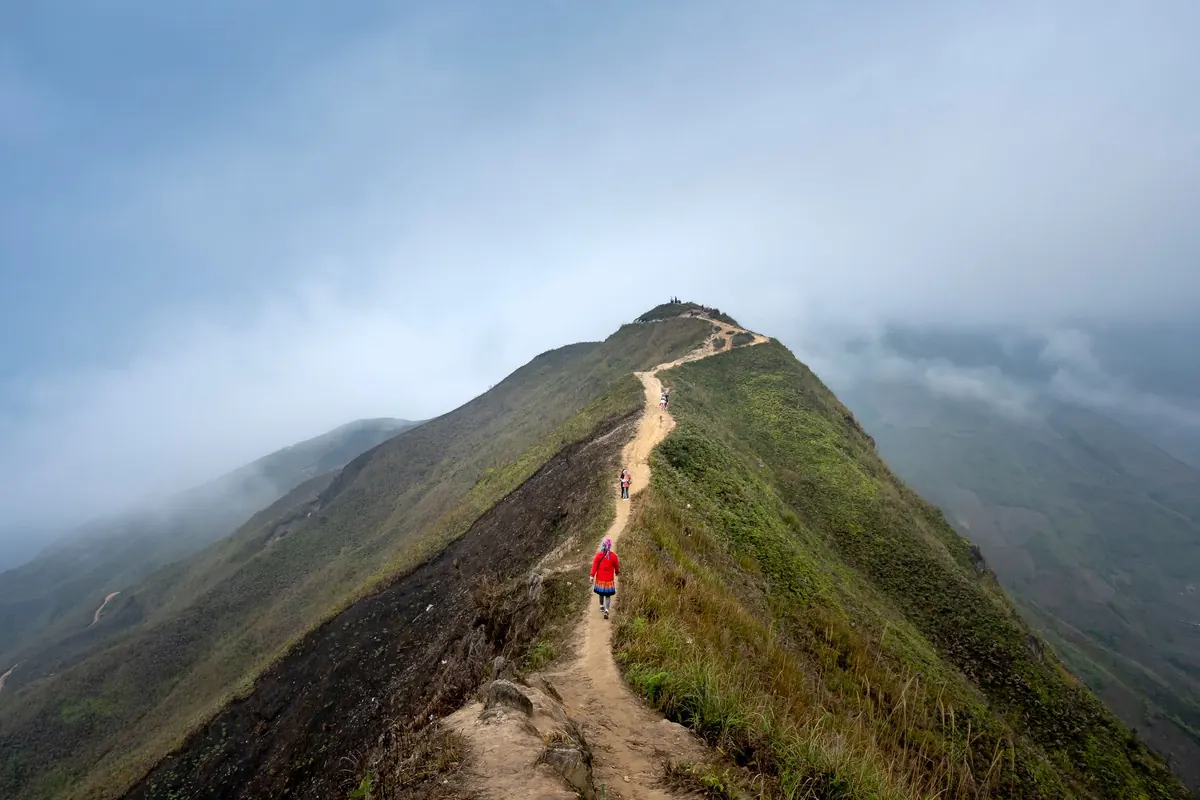
Photo: Quang Nguyen Vinh / Pexels